The Seasoning Habit
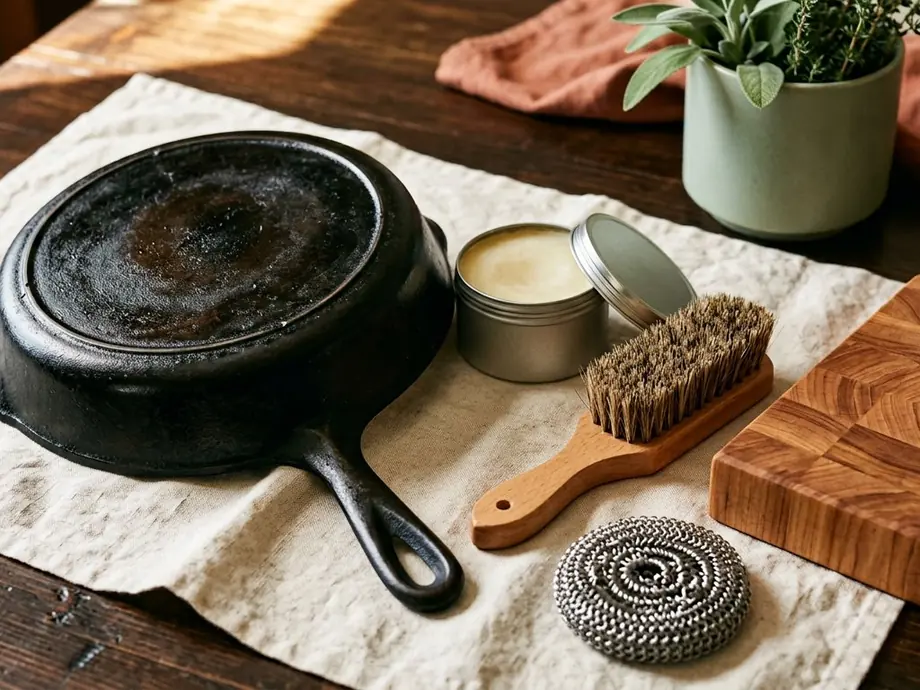
Cast iron care is a four-minute ritual, not a project. A wipe of oil while the pan is still warm, a horsehair pass on the hardwood board, and the patina deepens instead of breaking down.

Hearth & Hinge Household Works is an American specialist workshop and a curated specification directory for the small, repeated rituals that run a house: the morning counter reset, the entry drop zone, the laundry rotation, the Sunday repair. Every catalogued entry is published with its species, finish, hardware, grip dimension and expected service life, so a household decision can be made on evidence rather than atmosphere.
We keep to four materials we can account for — dovetailed black walnut, quartersawn white oak, solid cast brass and waxed cotton canvas — and we publish the care rotation that keeps each one serviceable. Nothing here is designed to be replaced in three years.
A household system is only as good as the habit it supports. These three studies show the rituals our directory is organized around, documented in our Vermont studio with the actual materials we specify.
Cast iron care is a four-minute ritual, not a project. A wipe of oil while the pan is still warm, a horsehair pass on the hardwood board, and the patina deepens instead of breaking down.

Two sets in service, one set resting. Cedar blocks are sanded lightly each spring to reopen the grain, and the leather pull tabs make a high shelf reachable without a stool.

A shelf that signals the end of the working day. Brass that takes a patina, a timer with an oversized legible face, and wool that improves with washing rather than pilling away.
Twelve catalogued entries, filed by the room where the ritual happens. Choose a room to narrow the directory; each card lists its specification code, primary material, finish and expected service life.
Showing 12 of 12 catalogued entries for every room.
HH-KIT-01
Hand-cut dovetail corners and movable dividers over a non-slip cork drawer liner. Sized in half-inch increments so a run of trays fills a drawer edge to edge.
HH-KIT-02
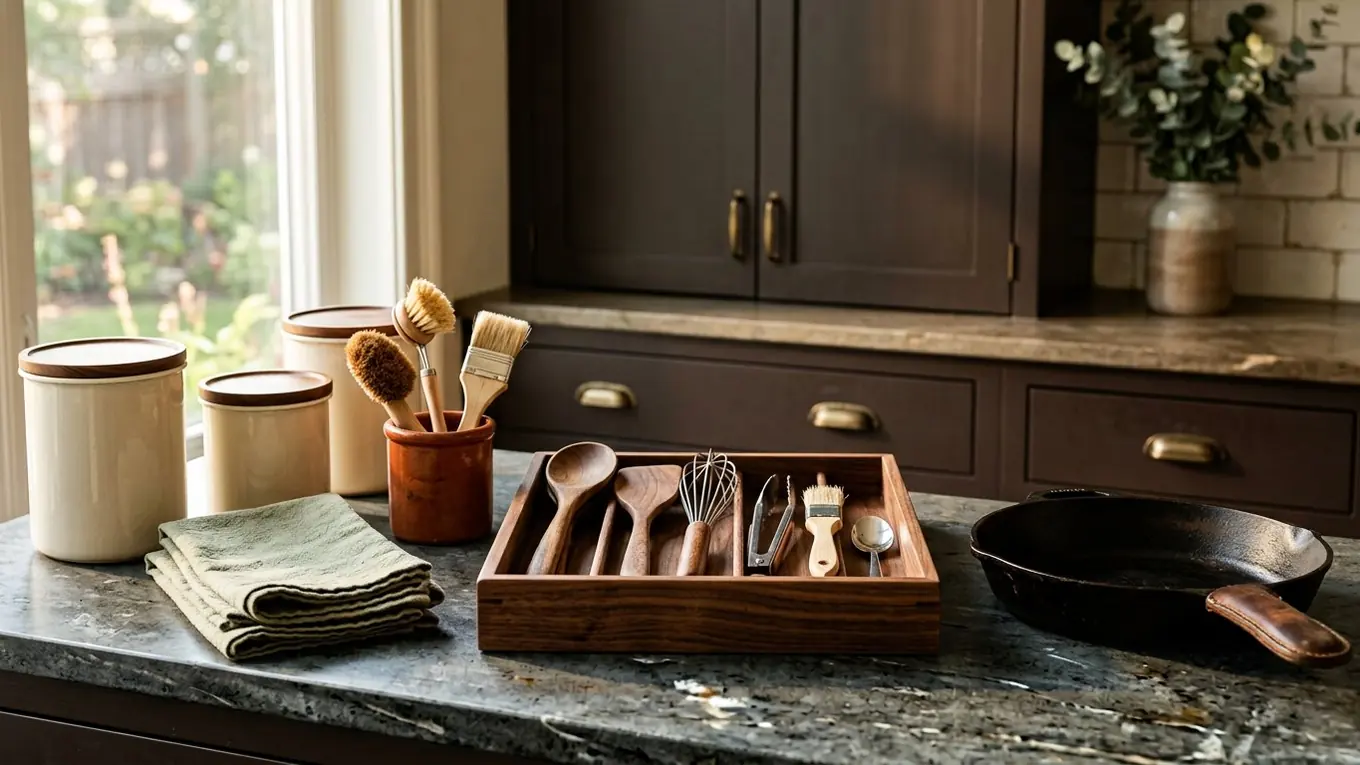
The crock keeps the four brushes you actually reach for upright and drying. Bristle heads are replaceable, so the turned beech handles stay in service.
HH-KIT-03
Three graduated canisters with a silicone-sealed walnut lid. The cream enamel wipes clean with a damp cloth and will not hold pantry odors.
HH-ENT-01
Rift and quartersawn stock barely moves across a New England heating season. Hooks are through-bolted, so a loaded coat hook never works itself loose.
HH-ENT-02
A shallow stoneware dish for keys and mail, paired with a deep-ribbed boot tray that holds a full melt without reaching the lip.
HH-LAU-01
Six densely felted spheres that shorten a dryer cycle and soften cotton without any coating. Stored in the turned maple bowl they ship in.
HH-LAU-02
Spring-free cedar pins that will not rust-stain a white shirt, plus a folding hard maple rack that collapses to two and a half inches.
HH-LIN-01
Four canvas bins with bridle leather pull tabs, six cedar blocks and two muslin lavender sachets for a two-in-service, one-at-rest linen rotation.
HH-WRK-01
Eleven pockets holding hardwood-handled drivers, a brass-head hammer, a tape and a microfiber cloth. Rolls to the depth of a kitchen drawer.
HH-WRK-02
The small hardware that ends a wobble in four minutes: graduated brass screws, self adhesive wool felt pads and two sizes of bumper.
HH-EVE-01
A pair of weighted holders sized for a standard tapered beeswax candle, with a long-handled snuffer that keeps a sleeve clear of the flame.
HH-EVE-02
A wind-up movement with an oversized legible face and a knurled crown that turns easily with dry hands. No battery, no standby draw, no beeping.
These four assemblies carry most of the weight in an ordinary American week. Each is shown as it leaves the Vermont bench, with the construction notes that matter after the first year.
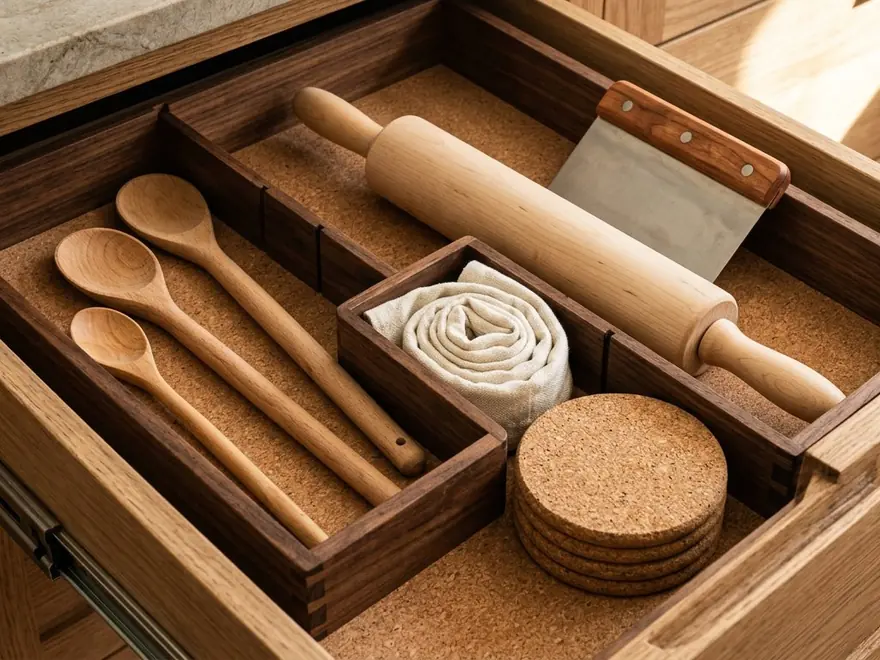
Most drawer inserts are stapled plywood that swells the first time a wet spoon goes in. Ours are half-inch solid black walnut, hand-cut dovetails at every corner, with dividers that move on a dadoed track rather than glue.
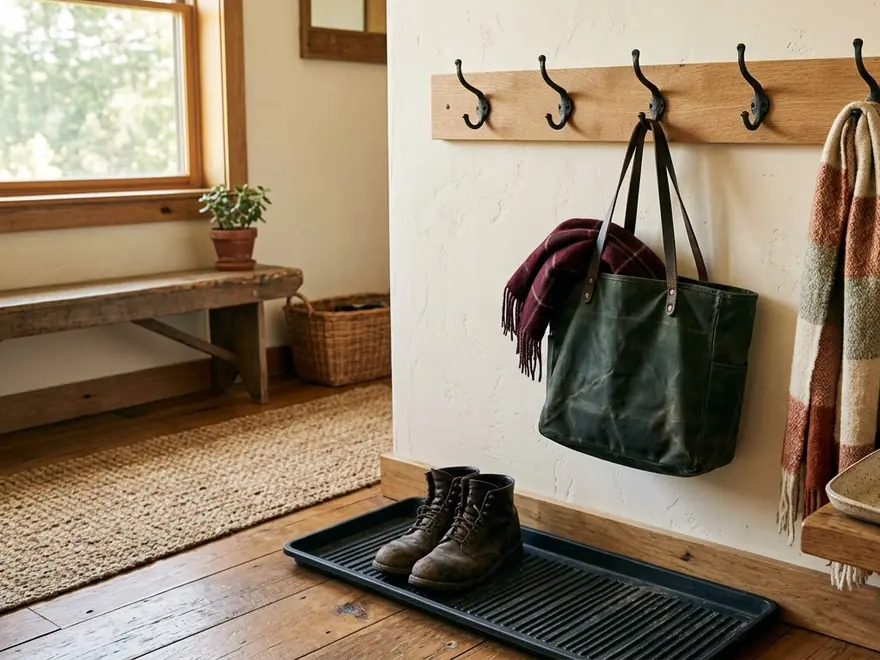
An entry fails when there is nowhere to put the four things you are holding. The rail carries the coat and the bag, the stoneware dish catches keys and mail, and the ribbed tray takes the boots before they reach the hall runner.

A laundry room earns its keep when every step has a home within one turn. Felted wool spheres replace single-use sheets, cedar pins hold a line without rusting, and the amber bottle keeps linen water out of the light.
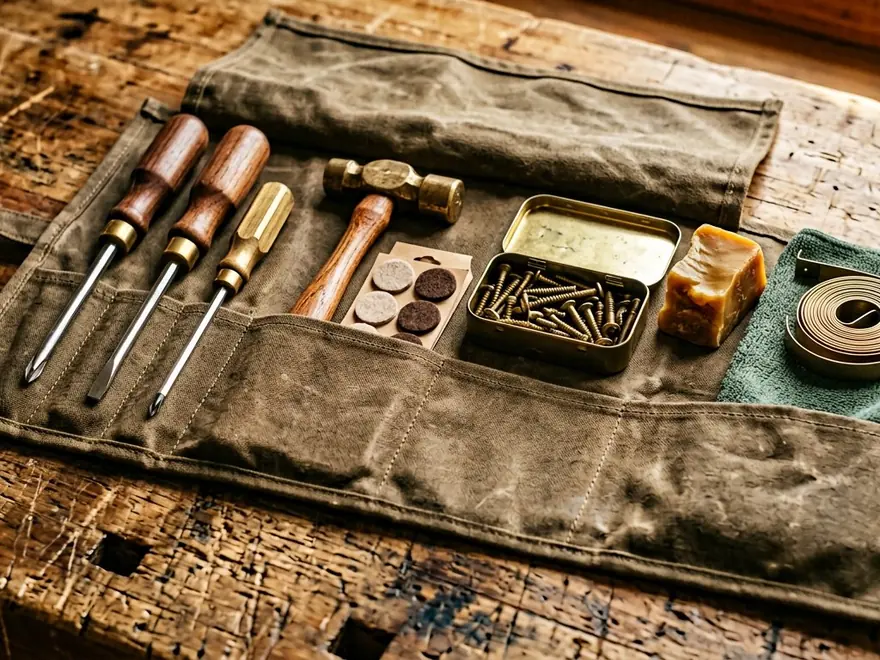
Small failures become permanent when the tools live in the basement. The roll is sized for a kitchen or hall drawer, so a loose hinge, a wobbling chair or a sliding rug gets handled the day it is noticed.
Choose a room focus, a primary material, a grip style and an upkeep cadence. The bench assembles a live specification summary with a reference code you can copy and bring to a conversation with our studio.
HH-KIT-WAL-CG-D90
The same figures we work to at the bench. Where a number can be measured, we print the number instead of an adjective.
Observations from the people who mill, finish and repair these pieces in Burlington.
“Nearly every drawer insert we are asked to replace failed at a staple, not at the wood. Cut the joint properly and the tray outlives the cabinet it sits in.”
“A finish that forms a film will eventually chip where a hand lands. Oil and wax wear down evenly instead, and anyone can renew them with a cloth on a Sunday.”
“Grip is the specification people forget. A handle under five-eighths of an inch looks elegant on a shelf and becomes tiresome by the second week of daily use.”
Four practical questions from American households weighing long-term home organization against another season of replacements.
Three things: solid stock instead of veneer, mechanical joinery instead of adhesive alone, and replaceable wear parts. A dovetailed black walnut drawer tray can be re-waxed for decades, while a brass hook can be unscrewed and re-seated in fresh wood. We publish the material, finish and service life of every catalogued entry so the decision is made on specifications, not on impressions.
Match the material to the moisture and the handling. Black walnut suits dry interior drawers and counters where you want a deep, closed grain. Quartersawn white oak handles damp mudroom and entry duty with very little seasonal movement. Solid brass belongs anywhere a hand touches the same point ten times a day, because it develops a patina instead of a worn coating.
Our bench rule is a light beeswax and flaxseed conditioning every ninety days for hardwood in daily service, and twice a year for shelving and storage that is handled less. Cast iron gets a thin wipe of oil after each wash and a full seasoning pass each season. The upkeep calendar in our Quality Standards and Everyday Care Guide lays out the full rotation.
Yes. Every handle, pull and dial in the directory is specified for comfortable grip: minimum eleven-sixteenths inch handle diameter, wide leather pulls on storage boxes, oversized legible dial faces, and pull weights kept under four pounds on loaded drawer trays. Those figures are printed in the specification ledger on this page.